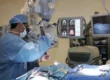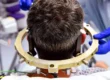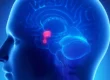


Prof. Shahzad Shams presently works as Head and Professor of Neurosurgery Department at Lahore General Hospital, LGH, Lahore.
This broad term emcompasses a whole variety of problems, some of which can be successfully treated by neurosurgery. Haemorrhages (bleeding) within the brain can be related to high blood pressure (hypertension) blood thinning (anticoagulant) medicines and some types of stroke.
The commonest type of brain haemorrhage requiring neurosurgical treatment is a subarachnoid haemorrhage.
Subarachnoid Haemorrhage
This type of haemorrhage usually occurs as the result of rupture of a small blister like abnormality (called an aneurysm) on one of the brain’s main arteries. Haemorrhage (bleeding) from one of these aneurysms is serious and potentially life threatening.
It often presents with a very sudden and severe headache, which may be followed by loss of consciousness, nausea, vomiting or epileptic fits/seizures.
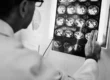
The diagnosis is usually made with a CT scan and/or a lumbar puncture. Once referred to a neurosurgical unit the blood vessels of the brain are imaged by cerebral angiography to see if there is an aneurysm or other abnormality present.
If there is, this may need to be treated by a neurosurgical operation to put a metal clip across the aneurysm and thereby prevent further bleeding, or alternatively the aneurysm may be filled up internally with metal coils, a procedure known as embolisation.
Other Types of Brain Haemorrhage
The various other types of brain haemorrhage may also sometimes need neurosurgical intervention in order to evacuate large blood clots which may be pressing on the surrounding brain.
Associated Terms Intracerebral haemorrhage, arteriovenous malformation, intracerebral haematoma/clot, subarachnoid bleed.